
Is Hungary a Soviet state?
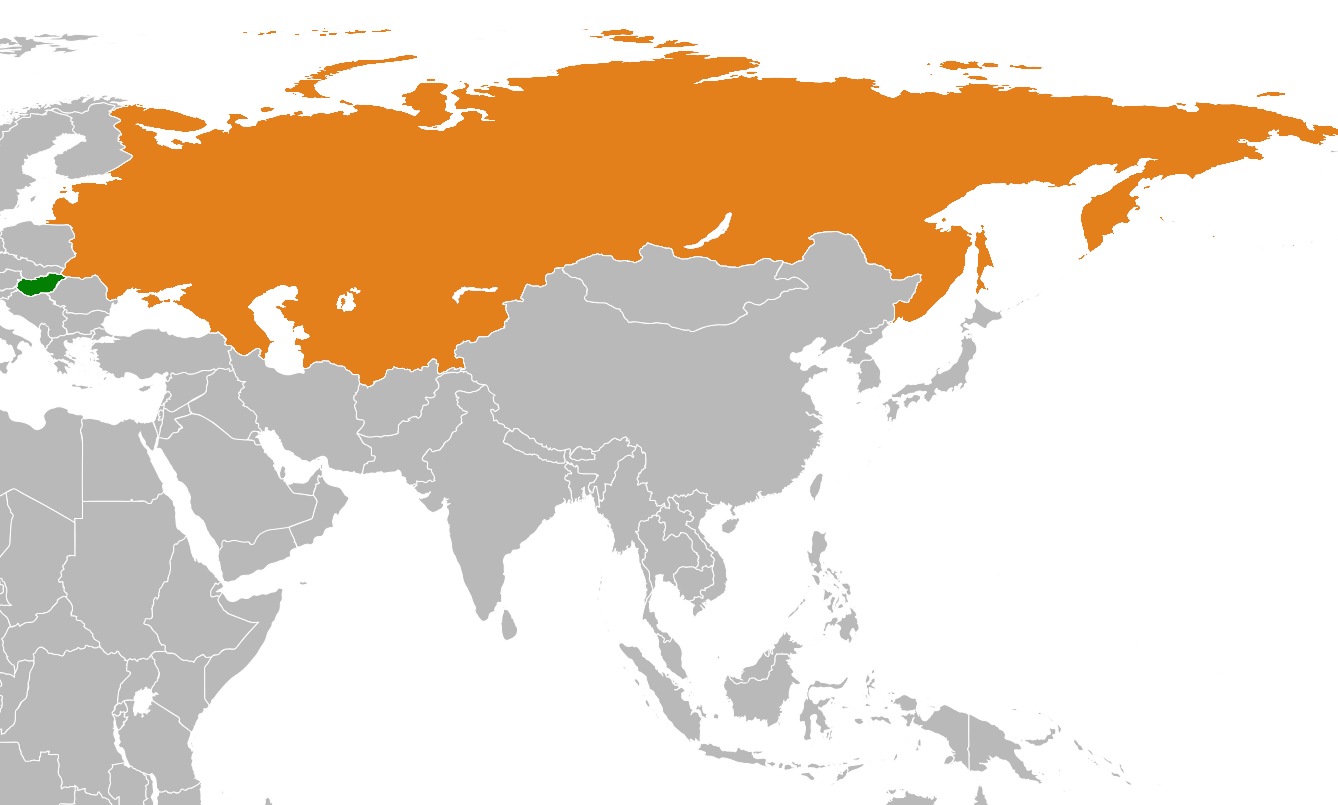
Was Hungary a Soviet
The Hungarian Soviet Republic was a small communist rump state, and the world's second socialist state. When the Republic of Councils in Hungary was established, it controlled approximately only 23% of Hungary's historic territory.
Is Hungary a post Soviet country
Communist rule in the People's Republic of Hungary came to an end in 1989 by a peaceful transition to a democratic system. After the Hungarian Revolution of 1956 was suppressed by Soviet forces, Hungary remained a communist country.
When was Hungary under Soviet rule
The Hungarian People's Republic (Hungarian: Magyar Népköztársaság) was a one-party socialist state from 20 August 1949 to 23 October 1989. It was governed by the Hungarian Socialist Workers' Party, which was under the influence of the Soviet Union.
What type of state is Hungary
parliamentary republic
Hungary is a parliamentary republic with a head of government – the prime minister – who exercises executive power and a head of state – the president – whose primary responsibilities are representative.
Was Budapest part of the USSR
In October, 1956, the Soviet Union ordered its troops to crush a nascent rebellion in Budapest, the capital of the Soviet satellite state of Hungary.
Why did Hungarians dislike Soviet rule
Hungarians were poor, yet much of the food and industrial goods they produced was sent to Russia. The Hungarians were very patriotic, and they hated Russian control – which included censorship, the vicious secret police (called the AVH after 1948) and Russian control of what the schools taught.
Is communism illegal in Hungary
Hungary had a law (Article 269/B of the Criminal Code (2000)) that banned the use of symbols of fascist and communist dictatorships. The same year the Constitutional Court upheld the law when it was challenged, claiming that the involved restriction of the freedom of expression was justified.
Was Budapest in the USSR
In October, 1956, the Soviet Union ordered its troops to crush a nascent rebellion in Budapest, the capital of the Soviet satellite state of Hungary.
What Hungary is part of USSR
Hungary and the Soviet Union
The People's Republic of Hungary (Magyar Népköztársaság) was the official state name of Hungary from 1949 to 1989 during its Communist period under the control of the Soviet Union.
Are Hungarians Slavic or Germanic
Ethnic Hungarians are a mix of the Finno-Ugric Magyars and various assimilated Turkic, Slavic, and Germanic peoples. A small percentage of the population is made up of ethnic minority groups. The largest of these is the Roma (Gypsies).
Which countries are part of USSR
Union Republics of the Soviet Union
| Name | Capital | Sovereignty |
|---|---|---|
| Russian Soviet Federative Socialist Republic | Moscow | 12 June 1990 |
| Tajik Soviet Socialist Republic | Dushanbe | 24 August 1990 |
| Turkmen Soviet Socialist Republic | Ashkhabad | 27 August 1990 |
| Ukrainian Soviet Socialist Republic | Kiev | 16 July 1990 |
Is Hungarian close to Russian
Hungarian and Russian are far from being similar languages. They belong to completely different language families: Russian is a Slavic language, whereas Hungarian is a Uralic language. Uralic languages such as Hungarian, are not part of the Indo-European language family of languages.
What’s second world country
The First World consisted of the U.S., Western Europe and their allies. The Second World was the so-called Communist Bloc: the Soviet Union, China, Cuba and friends. The remaining nations, which aligned with neither group, were assigned to the Third World.
Does Hungary have crime
The number of registered crime cases decreased in Hungary during the period under observation. In 2022, 168 thousand crime cases were reported compared to 447 thousand in 2010.
What are the countries of Soviet Union
Union Republics of the Soviet Union
| Name | Capital | Established |
|---|---|---|
| Russian Soviet Federative Socialist Republic | Moscow | 7 November 1917 |
| Tajik Soviet Socialist Republic | Dushanbe | 5 December 1929 |
| Turkmen Soviet Socialist Republic | Ashkhabad | 13 May 1925 |
| Ukrainian Soviet Socialist Republic | Kiev | 10 March 1919 |
Did Hungarians come from Russia
The ancient Hungarians originated from the Ural region in today's central Russia and migrated across the Eastern European steppe, according to historical sources.
Are Hungarians from Siberia
The Hungarian language is classified as an Ugric language, and Hungarians are commonly considered an Ugric people that originated from the Ural Mountains, Western Siberia or the Middle Volga region.
Are Magyars Huns
The brothers Hunor and Magor were the legendary forefathers of the Huns and the Hungarians, or Magyars, according to most Hungarian chronicles.
Is Poland part of the USSR
Like other Eastern Bloc countries (East Germany, Czechoslovakia, Hungary, Romania, Bulgaria and Albania), Poland was regarded as a satellite state in the Soviet sphere of influence, but it was never a part of the Soviet Union.
Which 15 countries are separated from USSR
PoliticsEstonia, Latvia, and Lithuania as "free" countries.Armenia, Georgia, Moldova, and Ukraine were listed as "partly free".Azerbaijan, Belarus, Kazakhstan, Kyrgyzstan, Russia, Tajikistan, Turkmenistan, and Uzbekistan were listed as "not free".
Do they speak Russian in Hungary
Hungarian is the official language of Hungary and is spoken by most of the country's population. Minority languages – Russian, Romanian, Croatian, Serbian, Slovak and Ukrainian – are spoken by the minority communities of the country. Popular foreign languages spoken in Hungary are English and German.
Do Hungarians speak Slavic
Answer and Explanation: No, Hungarians are not a Slavic people. They are a Finno-Ugric people. Their language is related to Finnish and Estonian.
Is Poland a 1st world country
By the first definition, some examples of second world countries include: Bulgaria, the Czech Republic, Hungary, Poland, Romania, Russia, and China, among others.
Is Spain a 1st world country
Definition of First World
Modern journalists using the term First World countries are typically describing the most industrialized nations. This includes all of the major actors on both sides of the Cold War: the United States, Russia, China, United Kingdom, France, Germany, Spain, Australia, and more.
Is Budapest safe at night
Yes, Budapest city centre is safe to walk at night but there are some districts which we recommend to avoid. Hős Street, Józsefváros, Lipótváros and the city's underpasses are the most dangerous places to frequent at night.

0 Comments