
What was the most powerful empire in Europe?
Which were the two powerful empires that ruled over most of the Europe
Two powerful empires ruled over most of Europe, North Africa and the Middle East. The two empires were those of Rome and Iran. Rome dominated the Mediterranean and all the regions around that sea in both directions, north and south.
Who defeated the Roman Empire
leader Odoacer
In 476 C.E. Romulus, the last of the Roman emperors in the west, was overthrown by the Germanic leader Odoacer, who became the first Barbarian to rule in Rome. The order that the Roman Empire had brought to western Europe for 1000 years was no more.
How long did the Roman Empire last
Famously, Rome began in 753 BCE. 1,229 years later, the last Roman emperor in the Italian peninsula was deposed and the empire came to an end (at least the western half of it, as the eastern half persisted in various forms until 1453).
How large was the Roman Empire
1.9 million square miles
It was among the largest empires in the ancient world, with an estimated 50 to 90 million inhabitants, roughly 20% of the world's population at the time. It covered around 5 million square kilometres (1.9 million square miles) at its height in AD 117.
Who conquered most Europe
Charlemagne drew heavily on most of the kingdoms of Christian Europe, even those he conquered, for many of his advisers.
Who had the biggest empire in Europe
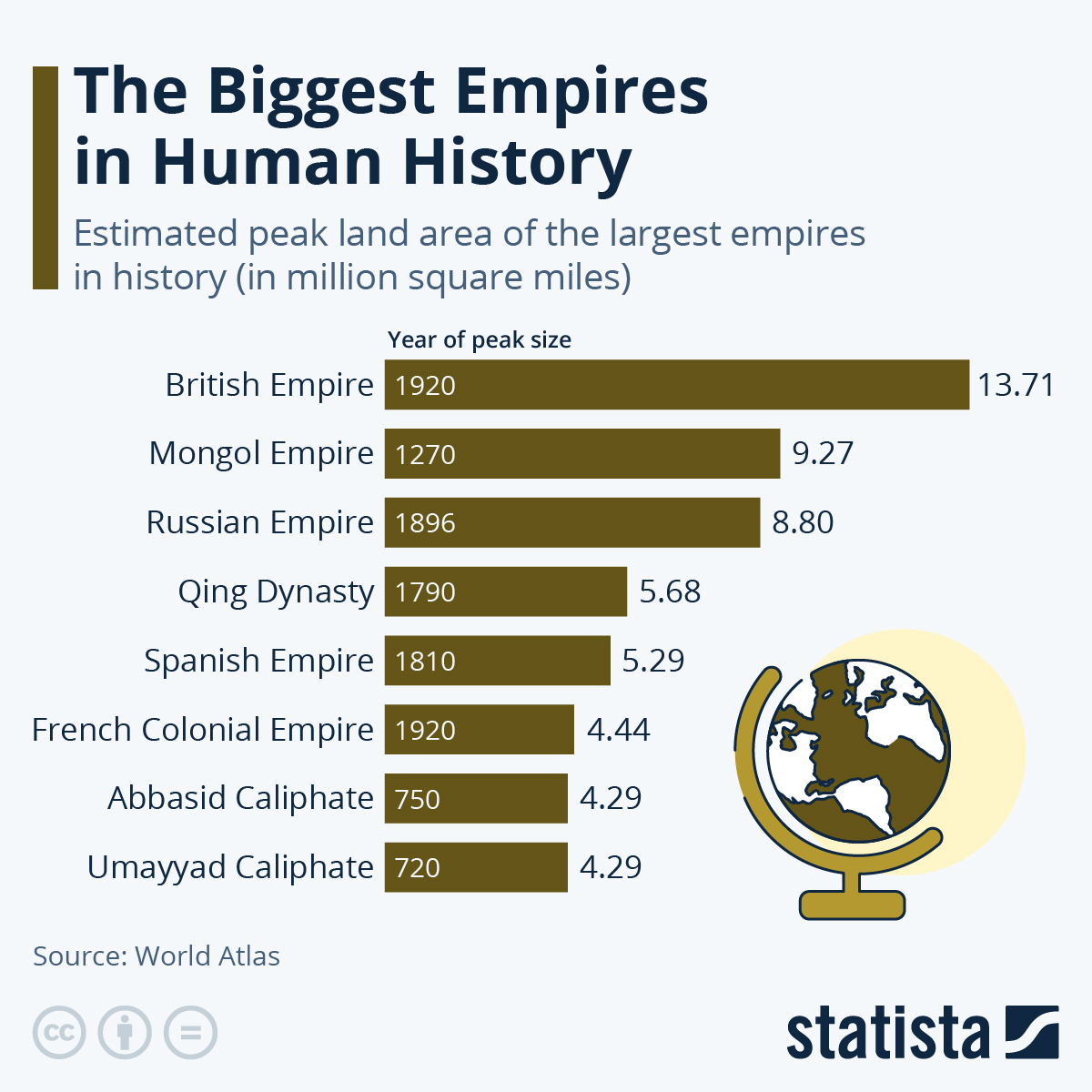
In 1913, 412 million people lived under the control of the British Empire, 23 percent of the world's population at that time. It remains the largest empire in human history and at the peak of its power in 1920, it covered an astonishing 13.71 million square miles – that's close to a quarter of the world's land area.
Did Rome lose any wars
Did the Romans lose any wars The Romans had many successes but they did sometimes lose. Notable losses came against the Germanic tribes and the Parthians. In both cases, the Romans underestimated their enemy and the difficulties of the local conditions.
Has Rome ever lost a war
In September AD 9 half of Rome's Western army was ambushed in a German forest. Three legions, comprising some 25,000 men under the Roman General Varus, were wiped out by an army of Germanic tribes under the leadership of Arminius.
How long did Greek empire last
Ancient Greek civilization began to develop at the end of Greek Dark Ages around 900 BCE, and lasted until 600 CE Over this 1,500-year period there were many social, economic, political, and cultural changes.
What caused Rome to fall
Corruption, the division of the empire, and invasion by Germanic tribes were the three main causes of the fall of Rome. Some scholars believe that there were other contributing factors as well.
Why did Rome fall
What caused the fall of Rome Corruption, the division of the empire, and invasion by Germanic tribes were the three main causes of the fall of Rome. Some scholars believe that there were other contributing factors as well.
How strong were Roman soldiers
How well trained were Roman soldiers A Roman soldier was a well-trained fighting machine. He could march 20 miles a day, wearing all his armour and equipment. He could swim or cross rivers in boats, build bridges and smash his way into forts.
What is the oldest empire in Europe
the Minoans
The first well-known literate civilization in Europe was that of the Minoans. The Minoan civilization was a Bronze Age civilization that arose on the island of Crete and flourished from approximately the 27th century BC to the 15th century BC.
What were the top 5 empires in Europe
Evidence is drawn from the five largest polities in the history of western Europe: the Roman Empire, the Frankish Empire, Napoleonic France, the Third Reich and the European Union.
Who is No 1 empire in the world
the British Empire
In 1913, 412 million people lived under the control of the British Empire, 23 percent of the world's population at that time. It remains the largest empire in human history and at the peak of its power in 1920, it covered an astonishing 13.71 million square miles – that's close to a quarter of the world's land area.
Who almost destroyed Rome
Hannibal is one of the greatest military generals in history, whose tactics are still studied to this day. He famously led a Carthaginian army, including 38 elephants, over the Alps and came within sniffing distance of Rome.
What army defeated Rome
In one of the most decisive battles in history, a large Roman army under Valens, the Roman emperor of the East, is defeated by the Visigoths at the Battle of Adrianople in present-day Turkey.
Who almost defeated Rome
Hannibal
Hannibal is one of the greatest military generals in history, whose tactics are still studied to this day. He famously led a Carthaginian army, including 38 elephants, over the Alps and came within sniffing distance of Rome.
What killed the Greek empire
A 300-year drought may have caused the demise of several Mediterranean cultures, including ancient Greece, new research suggests. A sharp drop in rainfall may have led to the collapse of several eastern Mediterranean civilizations, including ancient Greece, around 3,200 years ago.
How did Rome beat Greece
Rome declared war on Macedonia (northern Greece). They defeated Macedonia at the Battle of Cynoscephalae in 197 BC and then again at the Battle of Pydna in 168 BC. Rome continued its conquest of Greece. The Greeks were finally defeated at the Battle of Corinth in 146 BC.
Why did Greece fall
A 300-year drought may have caused the demise of several Mediterranean cultures, including ancient Greece, new research suggests. A sharp drop in rainfall may have led to the collapse of several eastern Mediterranean civilizations, including ancient Greece, around 3,200 years ago.
How do empires fall
As the empire struggled to meet growing expenses, the elites in the center were less motivated to help the emperor maintain control. When a crisis hit—such as rebellion, plague, or attack from outside groups—the emperor was eventually unable to respond and the empire itself would begin to collapse.
Why did Greek empire fall
Constant war divided the Greek city-states into shifting alliances; it was also very costly to all the citizens. Eventually the Empire became a dictatorship and the people were less involved in government. There was increasing tension and conflict between the ruling aristocracy and the poorer classes.
How did Greece fall
A 300-year drought may have caused the demise of several Mediterranean cultures, including ancient Greece, new research suggests. A sharp drop in rainfall may have led to the collapse of several eastern Mediterranean civilizations, including ancient Greece, around 3,200 years ago.
How tall were Romans 2000 years ago
Remember the average life for a man in the Ancient Rome's times was about 40… Even the average height was shorter than today's Romans: around 5'5”!


0 Comments